

A growing church needs more than occasional photographs from Sunday morning. It needs a visual content strategy that intentionally shows people who the church is, whom it serves, what it believes, and how someone can become part of its community.
Before many people attend a service, register for an event, join a small group, or allow their children to participate in a ministry, they encounter the church online. They visit its website, review its social media accounts, watch a sermon, or examine photographs from previous services and events.
The images they find help answer important questions:
- Will I feel welcome here?
- Are there people like me in this congregation?
- What should I expect during a service?
- Is this a safe and engaging place for my children?
- Is this church active in the community?
- Can I trust its leaders?
- Is there a place for me to serve and grow?
A strategic collection of authentic photographs can begin answering those questions before a visitor ever enters the building.
That is why photography should not be viewed only as documentation. For a growing church, photography is also a ministry communication tool.
What Is a Church Visual Content Strategy?
A church visual content strategy is a plan for creating, organizing, and using photography and video to support the church’s mission, communications, ministries, and outreach goals.
Instead of photographing whatever happens and deciding how to use the images later, the church begins with a purpose. Its leaders identify the people they need to reach, the stories they need to tell, and the actions they want viewers to take.
Those actions might include:
- Planning a first visit
- Watching a sermon
- Registering for an event
- Joining a small group
- Volunteering in a ministry
- Supporting an outreach initiative
- Participating in a giving campaign
- Inviting another family
- Learning more about the church’s mission
The goal is not to make the church look perfect. The goal is to communicate its identity truthfully, consistently, and effectively.
Your Church’s First Visit Often Happens Online
For many prospective visitors, the first experience with a church no longer begins at its front door.
It begins on a screen.
Someone may discover the church through Google, Instagram, Facebook, YouTube, an online invitation, or a link sent by a friend. Within a few moments, that person begins forming an impression of the church.
An outdated website, inconsistent imagery, or a gallery filled with empty rooms can unintentionally make an active ministry appear disconnected or inactive. Authentic images of worship, fellowship, leadership, families, volunteers, and community outreach communicate something very different.
They allow prospective visitors to see the life of the church.
Strong church website photography can help visitors understand:
- The atmosphere of the worship experience
- The diversity of the congregation
- How people typically dress
- What children’s and student ministries look like
- Whether the environment feels warm and welcoming
- How the church serves its surrounding community
- What opportunities exist beyond Sunday morning
Effective visual communication reduces uncertainty. When people can see what to expect, taking the next step can feel less intimidating.
Church Photography Should Do More Than Document Sunday
Documentary photography records what happened. Strategic ministry photography considers how those images will continue serving the church after the moment has passed.
A photograph of a worship service might be used to:
- Introduce the church on its homepage
- Promote an upcoming worship experience
- Support a sermon recap
- Welcome first-time visitors
- Accompany an email newsletter
- Create social media content
- Promote a conference or special service
- Strengthen an annual ministry report
The same principle applies to photographs of baptisms, volunteers, community outreach, children’s activities, leadership teams, conferences, and small groups.
A well-planned visual strategy extends the value of every ministry moment. The photography does not stop working when the service or event ends.
Authentic Photography Helps Build Trust

Trust is essential to every ministry relationship. People want to know that the church they are considering is genuine. They want to see the real congregation, real leadership, real ministries, and real community—not generic images that could represent any organization.
Stock photography can fill an empty space on a website, but it cannot accurately communicate the culture of a specific church.
Authentic church branding photography allows people to recognize the ministry when they arrive. The leaders they saw online are the leaders who welcome them. The environment feels familiar. The congregation reflects what was shown.
This alignment between a church’s digital presence and its in-person experience creates visual credibility.
Church photography builds trust when it is:
- Honest rather than overly staged
- Warm without feeling artificial
- Consistent with the actual culture
- Representative of the congregation
- Respectful of worship and sacred moments
- Focused on people rather than only buildings
- Created with appropriate permissions and safeguards
Authenticity does not require sacrificing quality. The strongest church imagery can be both polished and truthful.
Photography Helps People Imagine Themselves Belonging
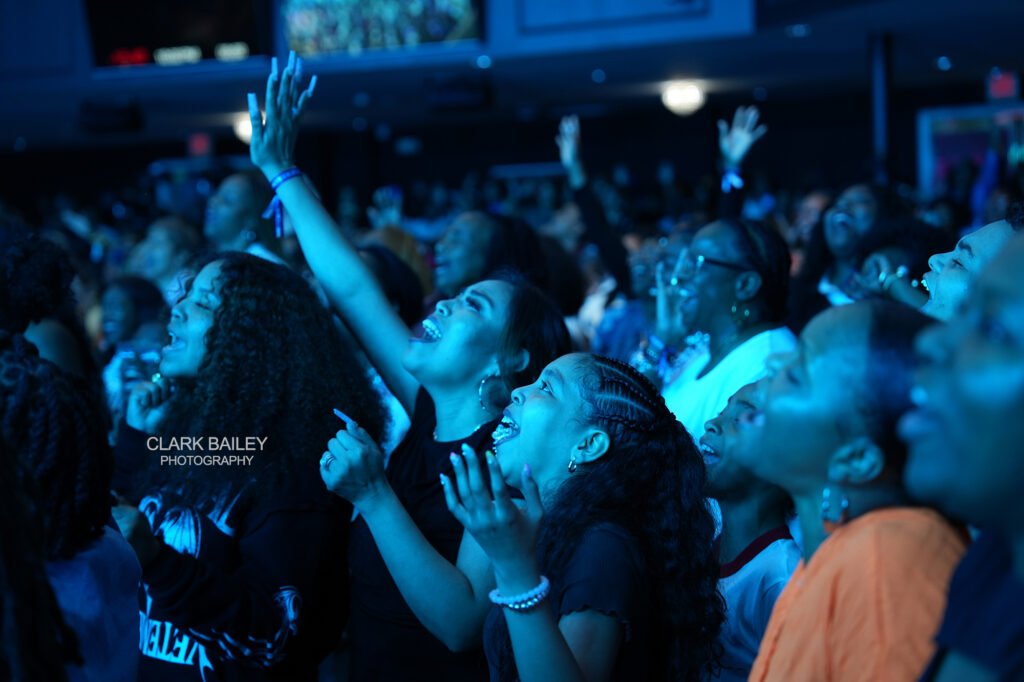
People are not only looking for information when they visit a church website. They are looking for signs of belonging.
A family may look for other families. A young adult may look for community. A parent may look for a safe, attentive children’s ministry. A senior may want to know whether older members remain visible and valued. A potential volunteer may look for meaningful ways to contribute.
Photography helps people see more than what the church does. It helps them imagine where they might fit.
Images of genuine connection can communicate:
- You can worship here.
- Your family can grow here.
- Your children can be cared for here.
- Your gifts can be used here.
- Your questions are welcome here.
- You can build relationships here.
- You can make an impact here.
That sense of belonging cannot be created through crowd photographs alone. A strong visual library should include wide images that show the church’s energy and close, human moments that reveal relationships.
A Visual Content Strategy Supports More Than Attendance
Church growth should not be measured only by the number of people in a room. Healthy ministry growth can also include stronger discipleship, deeper relationships, greater volunteer participation, increased community impact, and clearer communication of the church’s mission.
Strategic photography can support several areas of ministry growth.
Welcoming New Visitors
Visitor-focused imagery can show the arrival experience, hospitality team, worship environment, children’s check-in process, parking, accessibility, and opportunities to connect. These images make the first visit feel more predictable and approachable.
Recruiting Volunteers
Many church members may not understand what happens behind the scenes of a ministry. Photographs can show volunteers serving in production, hospitality, children’s ministry, outreach, worship, administration, security, and event preparation.
Instead of merely asking people to serve, the church can show them what serving looks like.
Strengthening Giving and Stewardship Campaigns
Giving becomes more meaningful when people can see the ministry their generosity supports.
Images of outreach, missions, facility improvements, youth programs, community partnerships, and ministry activity can connect financial support to visible impact. Photography should never manipulate people into giving. It should help the church communicate transparently about how resources are being used to serve people and advance its mission.
Promoting Ministries and Events
An announcement tells people that an event is happening. Strong photography helps them imagine the experience.
Images from previous conferences, retreats, workshops, holiday services, youth gatherings, and community events can strengthen future promotion and improve registration campaigns.
Preserving the Church’s Story
Church history is being created every week. Baptisms, dedications, leadership transitions, community service, anniversaries, worship experiences, and personal testimonies are part of the ministry’s developing legacy.
Intentional documentation preserves those moments for future members, annual reports, anniversary celebrations, fundraising initiatives, and historical archives.
What Should a Church Photograph?
A complete church visual library should represent the entire ministry—not only the pastor, platform, or worship team. Consider developing content around the following visual categories.
Worship and Spiritual Life
Capture preaching, worship, prayer, baptisms, communion, altar ministry, personal reflection, and other meaningful expressions of faith. Photographers should approach these moments with discretion and respect. The goal is to preserve the experience without becoming a distraction.
Welcome and Belonging
Show greeters, ushers, members connecting, families arriving, fellowship, new-member activities, and the overall atmosphere of the church. These images are especially important for visitor-focused website pages and social media campaigns.
Leadership and Staff
Every church should maintain current, professional photographs of its pastors, ministry leaders, staff, and key volunteers. Leadership photography should include more than formal headshots. Environmental portraits and photographs of leaders interacting with people can communicate warmth, accessibility, confidence, and credibility.
Children and Student Ministries
Parents often examine children’s and student ministries carefully before visiting a church. With appropriate written permissions and safeguarding policies, photography can show secure check-in procedures, attentive volunteers, age-appropriate learning, group activities, worship, and positive interaction. Images involving minors should always be created and used according to the church’s consent, privacy, and child-protection standards.
Community Outreach
Show how the church serves outside its walls. This may include food distributions, school partnerships, neighborhood events, mentoring programs, missions, health initiatives, support services, and collaborations with community organizations. Outreach photography demonstrates that the church’s mission is active and visible.
Groups and Discipleship
Small groups, Bible studies, leadership development, workshops, and mentoring relationships reveal how people grow and connect beyond the primary worship service. These moments help communicate that the church offers opportunities for meaningful relationships and spiritual development.
Conferences and Special Events
Conferences, revivals, leadership gatherings, concerts, holiday services, and anniversary celebrations often require a more comprehensive content plan.
In addition to documenting the event, photography should capture speakers, attendees, sponsors, volunteers, venue details, audience response, branded elements, and behind-the-scenes preparation.
This gives the church content for post-event recaps, future promotion, speaker relations, sponsorship reporting, and institutional archives.
Build a Year-Round Church Content Library
Church communications teams frequently face the pressure of finding something new to post every week.
A planned photography approach can reduce that pressure by creating a versatile content library that serves multiple ministries and platforms throughout the year.
One strategic content session or well-covered ministry weekend can produce images for:
- Website banners and landing pages
- Social media posts
- Email newsletters
- Sermon series promotions
- Event registration pages
- Volunteer recruitment
- Giving and stewardship campaigns
- Annual reports
- Printed brochures
- Leadership profiles
- Media and public-relations materials
- Holiday promotions
- Community outreach campaigns
- Conference marketing
- New-member resources
This is sometimes described as a “capture once, publish many times” approach. It does not mean repeatedly posting the same image. It means intentionally capturing a variety of compositions, people, ministries, and moments that can be adapted for different uses.
For example, a single ministry interaction might be photographed horizontally for the website, vertically for social media, tightly framed for a testimonial, and with negative space for graphic text.
That level of planning turns photography into a practical communications asset.
How to Create a Church Visual Content Strategy
A successful strategy does not begin with a camera. It begins with the church’s mission and communication priorities.
1. Identify the People You Need to Reach
Your visual needs will change depending on whether you are communicating with prospective visitors, current members, parents, volunteers, donors, ministry partners, or the surrounding community. Define the audience before planning the photographs.
2. Determine the Next Action
Decide what you want viewers to do after seeing the content. Should they plan a visit, register, volunteer, give, watch, share, or learn more? This helps determine which moments and supporting details need to be photographed.
3. Audit Your Existing Images
Review the church’s website, social platforms, email campaigns, print materials, and event pages.
Look for:
- Outdated staff photographs
- Ministries that are underrepresented
- Overused images
- Inconsistent editing styles
- Empty-room photographs
- Missing visitor information
- Seasonal content gaps
- Images that no longer reflect the congregation
- Important programs without current photography
The audit will reveal what the church already has and what it needs next.
4. Establish Visual Content Pillars
Choose several recurring categories that reflect the church’s mission.
A church might select:
- Worship
- Belonging
- Discipleship
- Families
- Leadership
- Service
- Community impact
These pillars help the communications team maintain balance. They also prevent the church’s public image from becoming centered on only one personality or ministry.
5. Create a Strategic Shot List
A shot list should describe more than objects or people. It should identify the stories the church needs to communicate.
Instead of requesting only “pictures of greeters,” consider requesting:
- A greeter welcoming a first-time family
- A volunteer helping someone find the correct entrance
- Members talking in the lobby
- Clear exterior arrival and directional details
- A guest receiving assistance at a welcome desk
This produces imagery with purpose and context.
6. Plan for Every Platform
Website banners, Instagram Stories, printed brochures, YouTube thumbnails, and email headers require different compositions.
Your photographer should understand where the images will be used and deliberately capture horizontal, vertical, wide, and close-up options.
7. Organize the Content Library
Photographs become less useful when no one can find them.
Organize images by date, ministry, event, subject, and usage. Clearly identify photographs approved for public communication and note any restrictions.
A well-maintained library makes it easier for staff and approved volunteers to find the right content without searching through thousands of unrelated files.
8. Establish Consent and Privacy Standards
Churches should create clear policies for photographing services, events, children, prayer, counseling, and sensitive ministry situations.
The policy should address:
- Photo and video notices
- Written releases when appropriate
- Parental consent for minors
- Restricted individuals or situations
- Secure file access
- Appropriate image usage
- Procedures for requesting removal
Respect for the congregation must remain more important than obtaining a photograph.
9. Review What Is Working
Evaluate how visual content supports the church’s objectives. Depending on the campaign, the church might review website engagement, event registrations, volunteer inquiries, social media saves and shares, email clicks, giving-page visits, or first-time guest activity.
The purpose is not to assign every ministry result to photography. It is to learn which stories and formats help people understand the message and take the next step.
Why Consistency Matters in Church Branding Photography
Consistency builds recognition. When a church uses drastically different photography styles, outdated staff portraits, mismatched colors, and unrelated stock images, its communications can feel fragmented. A consistent visual identity helps connect the church’s website, social media, events, printed materials, and physical environment.
Consistency does not mean every photograph must look identical. It means the imagery should share a recognizable approach to:
- Color and editing
- Lighting
- Emotional tone
- Composition
- Representation
- Brand values
- Image quality
For a growing church with multiple campuses, ministries, or communications volunteers, visual standards become especially important. They help different teams communicate as one organization.
Choosing the Right Church and Ministry Photographer
Church photography requires more than technical camera skills. The photographer must understand how to work in worship environments, anticipate meaningful moments, remain unobtrusive, communicate with ministry leaders, and create images for multiple platforms.
Look for a photographer or visual partner who can:
- Understand the church’s mission and audience
- Help develop a content plan
- Work respectfully during worship and prayer
- Photograph diverse ages, ministries, and environments
- Capture both large-scale energy and personal connection
- Create content for websites, social media, print, and campaigns
- Follow the church’s privacy and safeguarding requirements
- Organize and deliver a useful visual library
- Maintain a consistent visual style
- Support long-term communication goals
The strongest relationship is not simply between a church and someone who takes photographs. It is between a ministry and a visual partner who understands how imagery supports mission, communication, and growth.
From Occasional Photography to Intentional Visual Ministry
Your church is already creating meaningful moments. People are worshiping, serving, learning, giving, connecting, and experiencing transformation. The question is whether those stories are being captured and communicated with clarity and intention. A visual content strategy helps your church show people what God is doing through its ministries while giving prospective visitors a clearer picture of the community they are considering.
It turns photography from an occasional event expense into a long-term ministry resource. Most importantly, it helps people see more than a service. It helps them see the mission, the people, the impact, and the possibility that they may have a place within the story.
Develop a Visual Strategy for Your Church
Clark Bailey helps churches and ministries communicate their mission through strategic photography, leadership branding, event coverage, and visual storytelling. As a Visual Growth Partner for Purpose-Built Brands, Clark works with ministry leaders to create authentic visual content that strengthens trust, supports church communications, and extends the impact of important ministry moments.
If your church serves Washington, DC, Maryland, Northern Virginia, or the surrounding region, let’s develop a visual content strategy designed around your mission, ministries, and communication goals.
Schedule a Church Visual Strategy Consultation
Together, we can create more than photographs. We can build a visual library that helps people see your church, understand its mission, and take their next step.